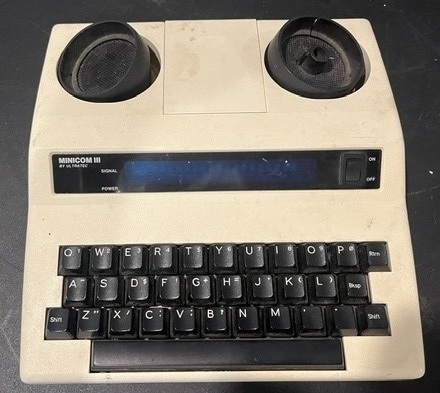
The Ultratec Minicom III is a 1986 telecommunications device for the deaf (TDD / TTY). It turns a voice telephone into a text path: type on a small QWERTY keyboard, read a one-line display, and send Baudot tones through acoustic cups under the handset. In the MicroBasement it belongs with the phones and acoustic-coupler modems: same PSTN, different users, same rubber cups.
Ultratec of Madison, Wisconsin built Minicom TDDs for home and office use. The III is a compact portable: about 9-5/8 in x 10 in x 2-3/16 in, just under 3 lb. Nameplate is on the bottom. A later Minicom IV added a parallel printer port. NSN listings also show Minicom III as a catalog name for related telephone gear; this page is the Ultratec TTY.
Power on (red lamp). Seat the telephone handset in the two rubber cups, cord to the left. Watch the signal lamp: steady red is dial tone; flicker follows ring, busy, and speech on the line. Dial on the telephone, then type. End with the TDD codes everyone used:
The cups were sized for the old Western Electric handset. Modern slim handsets leaked noise and made a poor seal.
No printer on the III. The IV added a parallel port.
The Lex-11 and the Hayes acoustic-era boards used the same trick: handset in rubber. Those carried ASCII for computers. The Minicom III carried Baudot for people who could not use the voice network. Relay services and later text-on-cellphones retired most TDDs. The box stays useful as a working demo of how the phone system carried text before the Internet did.
TDD etiquette (GA / SK) and 45.5-baud Baudot are the same family as ham RTTY, on different frequencies. In the collection the Minicom III is the human-services end of that wire, next to the lineman's handset and the candlestick.