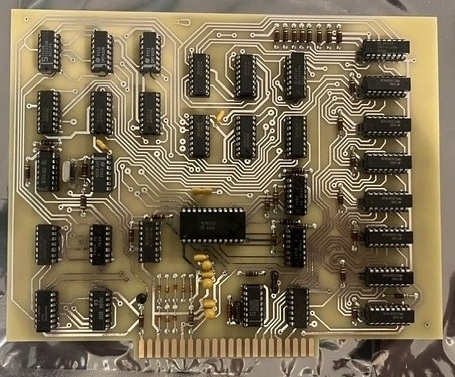
The Digital Group Video Card was one of the earliest practical video display interfaces for hobbyist microcomputers in the mid-1970s. Designed by Dr. Robert Suding and published in the Digital Group newsletter, it allowed builders to add a real CRT display to early systems like the Mark 8. In the MicroBasement, this card represents the pioneering spirit of 1970s homebrew computing - a simple, build-it-yourself terminal that turned a TV into a usable video display without expensive commercial hardware. This write-up covers its history, publication, specifications, design for the Mark 8, and legacy.
The Digital Group was founded in 1974 by Dick Bemis and Dr. Robert Suding in Denver, Colorado. Suding, an engineer and frequent contributor to hobbyist magazines, designed the Video Card as a low-cost solution for early 8008 and 8080 systems. The complete plans - including schematics, parts list, and construction details - were published in the Digital Group Newsletter (issues around 1975 - 1976). This open, magazine-style publication model was typical of the era and helped thousands of hobbyists build their own video terminals.
The card was built entirely with TTL logic (no microprocessor on the board) and used the following key components:
It supported basic cursor control and scrolling, making it a major upgrade over LED displays or Teletype machines.
The card was specifically created to work with the Mark 8 (Jonathan Titus' 1974 8008-based computer). The Mark 8 had no built-in video, so the Digital Group card provided a practical, low-cost display solution. It connected via the Mark 8's parallel I/O ports using a simple parallel interface. Hobbyists could build the card and have a working terminal for programming and data entry - a huge leap forward in 1975 - 1976.
The Digital Group Video Card was a pioneering project that showed hobbyists could build real video terminals at home using common TTL chips and 1101 memory. It helped bridge the gap between crude LED displays and modern monitors, inspiring many to pursue careers in computing. In the MicroBasement, it stands as a testament to the open, collaborative spirit of the 1970s homebrew era - a time when a newsletter article could give you a working video display for your Mark 8.